A BENETEAU x ENSAAMA chair

Since 2005, the Beneteau Foundation has been committed to the future of the seas. Launched and supported by the Groupe Beneteau, its work focuses on three key areas: promoting nautical heritage, protecting the environment and technological innovation. Since 2018, it has been collaborating with Ensaama* to redefine the standards of the nautical sector. The objectives: to support a new generation of designers and make sailing attractive to them. In 2025, the challenge set for the students was a significant one: “To equip the boat to make life on board easier.”

*École nationale supérieure des arts appliqués et des métiers d’art

An in-depth look with Cyril Sancereau, Secretary General of the Beneteau Foundation.
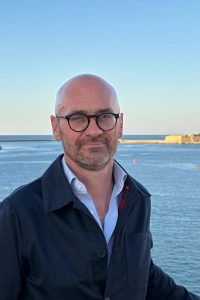
Cyril Sancereau
Why has Ensaama become a partner in imagining the future of boating?

Ensaama is a leading design school. It trains minds capable of thinking about the form, function, and storytelling of an object. Through this partnership, our goal is to expose these future talents to the realities of the sea and the industry, from materials to onboard uses. It is the first school in France to integrate nautical design into its curriculum. Students work on topics such as “The connected boat,” “Towards the new uses of tomorrow,” and “New concepts for sustainable boats.” Since 2024, a dedicated research chair has been further exploring these subjects.

It enables the boating industry to continue its transformation toward a more sustainable model, ensuring the pleasure of sailing in harmony with ecosystems.

What was the challenge set for the students for the 2025 edition?

In 2025, the Beneteau Foundation and Groupe Beneteau collaborated with fourth-year students on the theme “Equipping the boat to make life on board easier.” To strengthen the approach, we brought in Decathlon’s Tribord Sailing Lab as a partner. This dual industrial expertise—the naval know-how of Groupe Beneteau and Decathlon’s user-focused approach—pushed students beyond theory. Through an immersive process combining observation, ideation, and prototyping, they explored practical solutions to meet the real needs of future boaters. Each group presented its project to Groupe Beneteau and Decathlon, who selected the four most relevant proposals:

  • The “Cohabiter sur le First 30” project, proposing a modular textile layout solution—like an interior shelter—designed to preserve privacy and improve sleeping comfort during shared cruises or regattas.
  • The “Xtend” project, featuring an inflatable and deployable cockpit extension aimed at creating a new convivial living space at anchor while facilitating access to the water.
  • The “Terre et mer” project, showcasing a range of versatile, integrated coastal cruising accessories, including a dinghy, a sunshade, and comfort elements to enhance both navigation and stopover experiences.
  • The “Save Icare” project, transforming onboard safety equipment (harnesses, life jackets, jacklines), often perceived as constraints, into ergonomic and desirable objects.

The students took part in a week-long workshop at Decathlon’s Tribord Sailing Lab in La Rochelle during the Grand Pavois—one of the leading boat shows for sailing and watersports enthusiasts. At the end of the week, they presented their projects to a jury composed of the Beneteau Foundation, chaired by Annette Roux, along with members of the executive committees of Groupe Beneteau and Decathlon. This year, the “Save Icare” project won over the jury.

Beyond a purely stylistic exercise, why is it important for Groupe Beneteau to expose these students to eco-design from the drawing stage?

It is a strategic choice, as this approach is fully aligned with the Group’s sustainability and eco-design challenges, as well as with the school’s research chair. I would even say it is a vital necessity when working in industry to confront these issues. The environmental impact of a boat is also determined from the very first sketch. If we want to reduce that impact, it is essential that students—the future designers of our boats—integrate sustainable eco-design principles from the drawing phase.

While eco-design may seem obvious to this new generation, the challenge of these workshops is to confront it with the realities of industrial demands. By working on real-life cases from the outset, these students learn to combine their environmental convictions with the technical rigor of the profession. It is by tackling these complex questions early on that they learn to go further and turn a sustainable intention into a viable industrial solution.

Sustainability challenges are essential: manufacturers have clearly understood this and have been actively addressing the issue for several years. Schools, however, are not yet fully exposed to it. Our role within the Beneteau Foundation is to raise awareness and elevate the level of responsibility among students regarding these challenges.

In 2025, you took a further step by involving Decathlon in your workshop. What was the objective of this unprecedented trio?

Decathlon brings a user-centered design culture, cost control, accessibility, and the ability to distribute on a large scale. Groupe Beneteau contributes its expertise in boatbuilding and a very deep understanding of recreational sailors. Ensaama offers creative freedom along with the rigor of the design process. These three cultures are quite different—and that’s precisely why it works.

By combining these perspectives, we create the conditions for innovation that is both relevant and applicable. The workshop helps foster innovation in the boating industry. The ideas that emerge challenge and enrich our industrial assumptions and reflections, even if they do not immediately make their way onto our production lines.

Is this a way for Groupe Beneteau to attract a new generation of boaters?

In a way, yes! This partnership with Ensaama is a way of taking new uses in boating into account. By rethinking them, we show younger generations that boating is a field of serious innovation—challenging and meaningful. More broadly, the goal is to convince them and inspire them to get involved in the sector.

Supporting the nautical sports of tomorrow among students

Architecture, engineering, design, and art: many projects have been proposed by students to promote and encourage innovation in the world of boating.

Our partner Decathlon’s perspective

Combining our expertise with Groupe Beneteau reflects a shared ambition: making the sea accessible to as many people as possible. Today, eco-design is no longer an option—it is a necessity, and the Ensaama students have fully embraced this. Our dream is to design regenerative products. While we are not there yet, we are working together to radically reduce our impact and preserve our playground.

François Pinteaux, Director of the Tribord Sailing Lab – Decathlon

Ensaama’s perspective

This collaboration with the Beneteau Foundation enabled our students to turn the constraints of boating—safety, limited space, and the marine environment—into creative drivers. Free from industrial biases, they redefined usage, transforming technical equipment into intuitive and desirable objects. Modular partitions or “second-skin” safety: their fresh perspective reconciled utility and pleasure, proving that design is fertile ground for sustainable innovation.

Julien Soubeyran and Richard Devinast, professors of product design and industrial creation at Ensaama

By combining these perspectives, we create the conditions for innovation that is both relevant and applicable.