The recycling of composite materials has long been a major hurdle for the shipbuilding industry. In 2025, the Groupe Beneteau broke through this barrier by formalizing a groundbreaking industrial alliance.
The goal : to transform production scraps and end-of-life boats into new resources. We spoke with Erwan Faoucher, the Group’s Director of Procurement Strategy and Innovation.
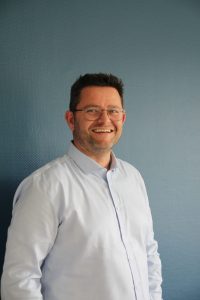
Erwan Faoucher, Director of Procurement Strategy and
Innovation at the Groupe Beneteau
What exactly does the industrial alliance initiated by the Group Beneteau consist of ?
It is a complete ecosystem bringing together leaders in chemistry, fibreglass and waste management. Around the Group Beneteau, we find Arkema (for the recyclable Elium® resin), Composite Recycling (for the separation process - pyrolysis), Owens Corning (for the reprocessing of fibreglass), Chomarat (for fibreglass weaving) and Veolia (for logistics). Together, we have created a closed loop: production offcuts are collected, chemically broken down, and then reinjected into the manufacture of new boats. This is a concrete response to the finite nature of resources.
Polyester recycling is an old challenge. Why does this alliance succeed where others have failed ?
The problem has always been the economic model. Recycling conventional polyester is costly for a low resale value. The turning point came with Elium® resin. Unlike standard polyester, it is a thermoplastic: it can be heated to make it liquid, then solid, in a reversible way. During pyrolysis, we recover a monomer (MAM) with a market value seven times higher than that of conventional polyester oil. By creating value, we make recycling industrially viable.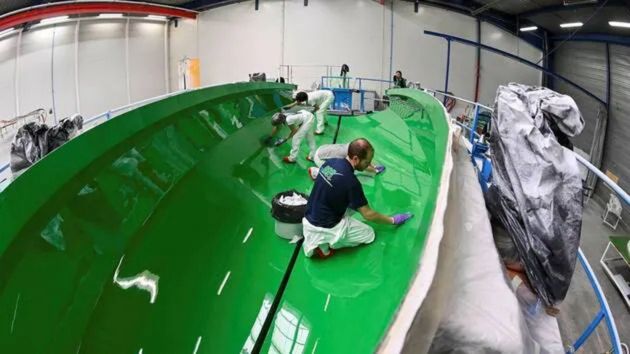
Photo credits: Franck Dubray
Why did you choose to recycle production offcuts rather than waiting for the end of life of the boats ?
A question imposed itself on us: "It is all well and good to promise a recyclable boat in 50 years, but what are you doing today?". That was a turning point. We decided to prove the feasibility of the system immediately by processing our own manufacturing waste (5 to 10% of the volume produced). This demonstrates that the model works at an industrial scale right now.
How does a production offcut today become a boat component tomorrow without losing its mechanical properties ?
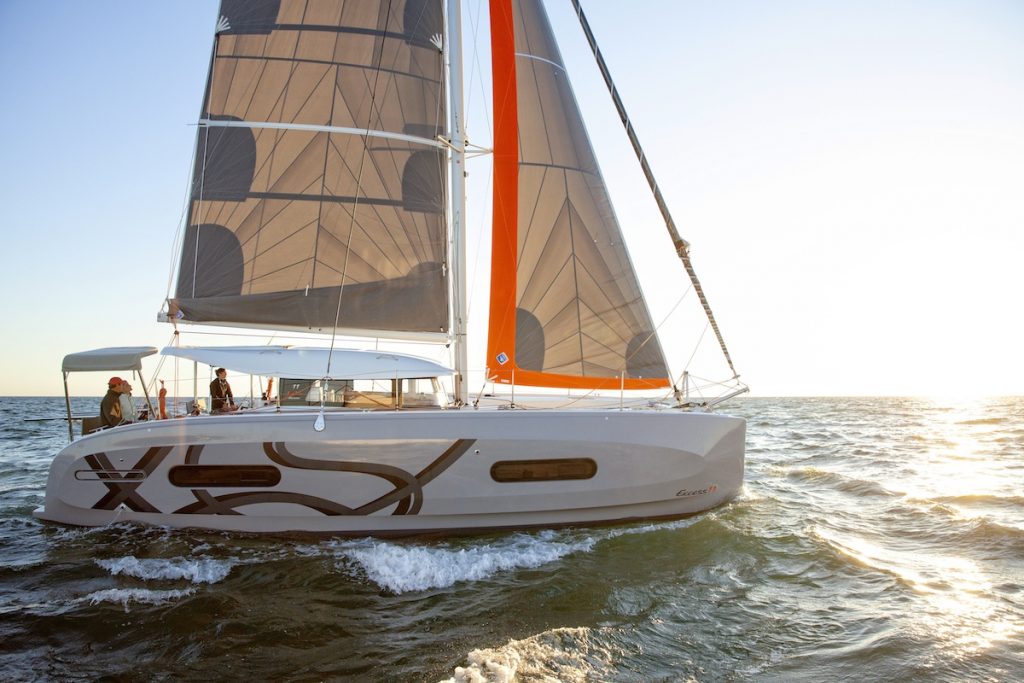
This is the magic of thermolysis, which consists of breaking down a material under the action of heat. More concretely, if you mechanically grind a composite, you break the fibres and polymer chains, which weakens the material. With our process, we "undress" the fibreglass and liquefy the resin without breaking their fundamental structures. It is like separating the links of a chain to reassemble them identically. The result is stunning: in March 2026 we presented a Lagoon 82 made up of 80% recycled fibres, with a robustness identical to new.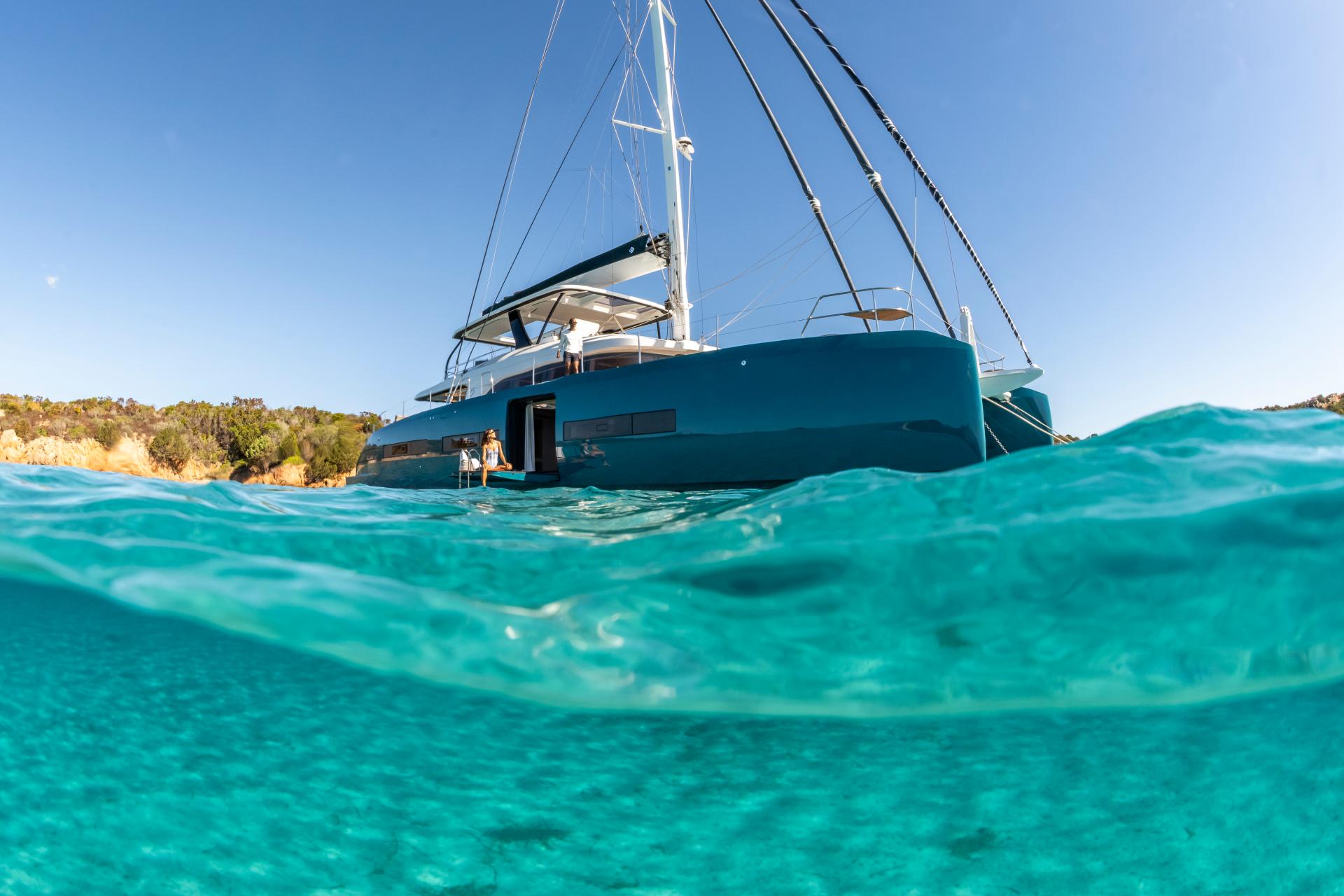
What is the exact role of the Groupe Beneteau within this collective ?
To use a fitting sporting analogy, we are the team selector. We did not invent pyrolysis or Elium® resin, but we took a global approach to bring these players together and coordinate the chain. Our role is to be the conductor who ensures that every step, from the collection bin placed by Veolia to the fabric woven by Chomarat, fits together perfectly.
This agility seems to be impressing other sectors such as the automotive and wind energy industries...
It is a real source of pride. Highly regulated sectors such as the automotive industry are watching us because we move faster. Our method is comparable to that of a start-up: we do, we analyse, we adjust. By showing that the loop is closed, we are telling the rest of the industry: "There are no more excuses, the technical proof is there".
Beyond CO2, what are the major environmental impacts ?
For Elium® resin, the objective is ultimately to achieve a 70% reduction in carbon impact compared to polyester, a trajectory we are targeting through the progressive integration of 100% recycled Elium® into our production cycles. But the challenge also lies elsewhere: it is about combating waste burial and the scarcity of sand, the raw material for glass. By recycling, we preserve soil and virgin resources.
When will we be able to say that a Beneteau boat is 100% "born from recycling and ready to become so again" ?
It is a long road. The use of Elium® requires new skills in our production workshops and acceptance of the additional cost of our boats by the market. But the momentum is underway. As Kenneth Blanchard's saying goes: "None of us is as smart as all of us together". It is this collective intelligence that makes the circular boat a reality of today and no longer a utopia for 50 years from now.
|
12.6 T
of Elium® used in 2025
|
60.4 T
of bio-based resin used in 2025
|
326.5 T
of attributed low carbon resin
|
14 T
of recycled fibres in 2025
|
12 T
of recycled fibres in the Lagoon 82
|