Fabien
Talents
Supply planner
The missions of the supply planner
The supply planner's job in the nautical industry is one of rigour and coordination. The supply planner ensures that goods are delivered on time and in the right quantities to internal customers, namely the production lines and warehouses. Any failure in the supply chain could quickly halt production and delay boat deliveries.
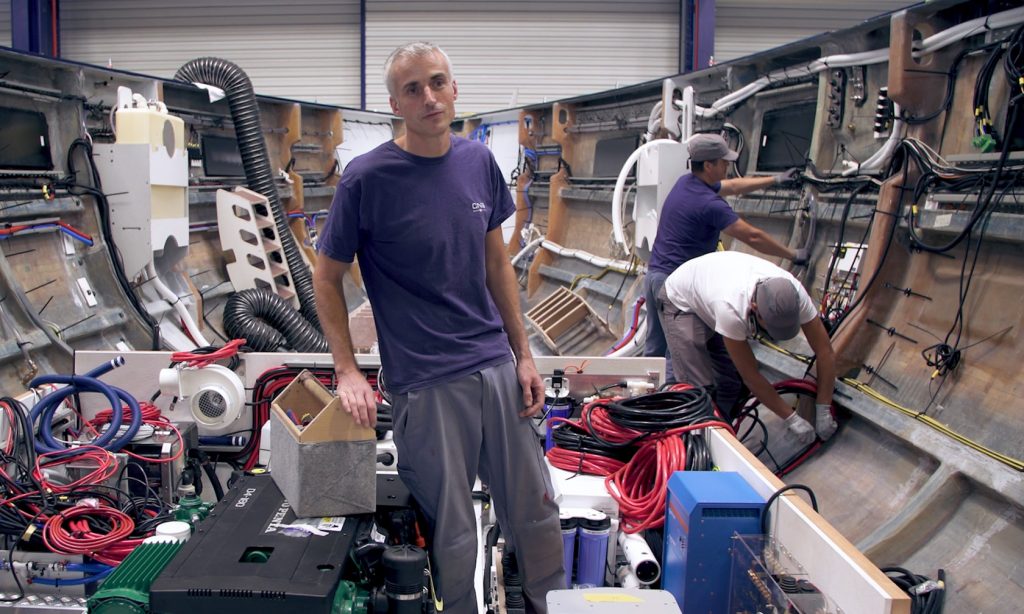
The Bénéteau Group appealed to me because of its field of activity. The boats we manufacture are magnificent products. I also identified with the company's values: boldness, conquest, rigour. It's a group that is well known in the region and attracts a lot of people, so we're proud to be part of it.
Supply planner
On a daily basis, the supply planner works within a team of around ten people, each managing an average of twenty suppliers for specific materials. He/she uses the company's ERP system to monitor boat production schedules and prioritise urgencies based on production progress. The role is not limited to screen work: he/she regularly visits the warehouse and factory floor to stay in contact with operational teams, collaborate with purchasing departments when integrating new supplier products, and ensure that everyone is working towards the same goal.
The key qualities required for this profession are rigour, reactivity, strong communication skills and the ability to manage numerous stakeholders simultaneously.
Initial training and apprenticeship
Several training pathways lead to the supply planner profession. A BTS Gestion des Transports et Logistique Associée (GTLA, level Bac+2) or a BTS Commerce International provide a good starting point, accessible after the Baccalauréat. For those aiming directly at a responsible position, a BUT Qualité Logistique Industrielle et Organisation (QLIO), a Licence Professionnelle Logistique et Supply Chain or a Bachelor Achats et Supply Chain (level Bac+3) are particularly valued by recruiters.
These programmes are available as initial training or apprenticeships, through a contrat d'apprentissage (ages 16 to 30) or a contrat de professionnalisation (from age 16, no upper age limit). They are eligible for CPF funding.
Career change
The supply planner profession is accessible to career changers with experience in stock management, logistics coordination or supplier relations. Specialised continuing education programmes are offered by organisations such as AFPA, AFTRAL or IFOCOP. They can be funded by France Travail, OPCOs or through a Projet de Transition Professionnelle (CPF de transition).
Career development
After several years of experience, the supply planner can progress to roles such as supply manager, Supply Chain Manager or purchasing manager, overseeing all supplier relationships and supply flows. Further training towards a Master Supply Chain Management or a Master Achats et Logistique Internationale (level Bac+5) opens the door to senior management positions within large industrial groups.
Découvrez d’autres métiers
Plongez dans l’aventure collective du Groupe Beneteau.
Luc
Project manager